India in 2026 is witnessing a transformative phase where government policies are not only shaping the economy but also directly influencing the daily lives of citizens. From healthcare and infrastructure to digital governance and climate action, these policies reflect a vision of inclusive growth and long-term sustainability. This comprehensive guide by Desh Headline explores the most important government policies in 2026, their objectives, and how they are impacting Indian citizens across different sectors.
Government Policies in 2026
Government policies are the backbone of national development. In 2026, India’s policy framework is focused on economic resilience, digital transformation, environmental sustainability, and social inclusion.
With rapid changes in global dynamics and domestic needs, policies are evolving continuously-making India News more dynamic and impactful than ever before.
Union Budget 2026: Key Highlights
The Union Budget 2026–27 plays a crucial role in shaping government policies.
- Increased capital expenditure to boost infrastructure
- Tax relief for middle-class citizens
- Focus on manufacturing and exports
- Push for green energy and sustainability
The budget emphasizes economic growth while maintaining fiscal discipline, with a fiscal deficit target of 4.3% of GDP.
Key Impact:
- Higher job creation
- Improved infrastructure
- Better tax savings for individuals
Major Government Schemes and Policies
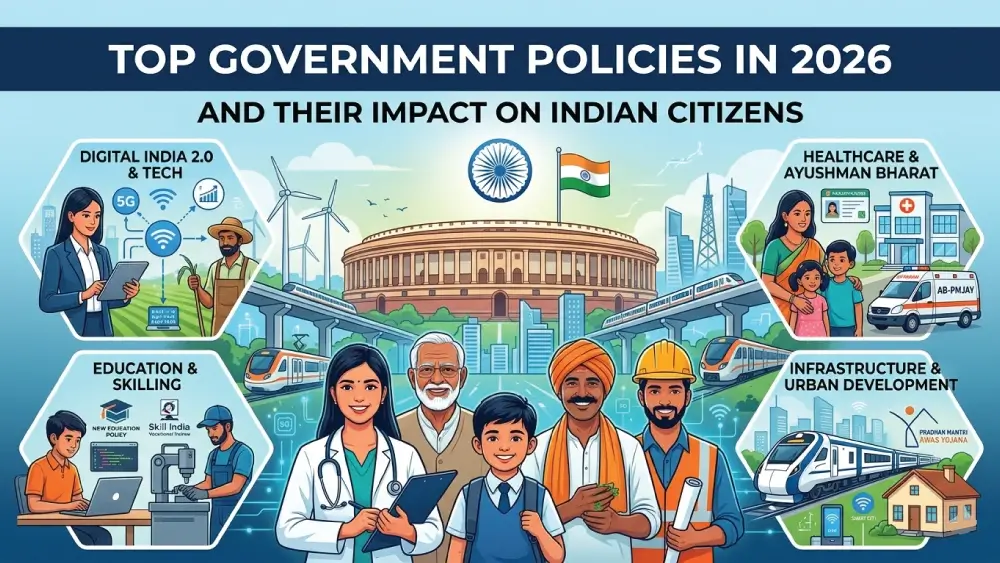
A. Healthcare Policies
Healthcare continues to be a top priority in 2026.
Key Scheme:
- Ayushman Bharat Yojana (PM-JAY)
This scheme provides health insurance coverage of up to ₹5 lakh per family annually, ensuring affordable healthcare access.
Impact:
- Reduced out-of-pocket medical expenses
- Increased healthcare access in rural areas
- Better emergency medical support
B. Agriculture & Rural Development
Agriculture remains the backbone of India’s economy.
Key Policies:
- PM-KISAN income support scheme
- Irrigation and reservoir development initiatives
- Promotion of solar farming under renewable programs
These policies aim to improve farmer income stability and productivity.
Impact:
- Direct financial support to farmers
- Improved irrigation and water availability
- Boost in rural economy
C. Employment & Skill Development
India’s youth population is a major asset, and policies are targeting employment generation.
Key Initiative:
- Prime Minister Internship Scheme
This program aims to provide millions of internships to bridge the gap between education and employment.
Impact:
- Enhanced employability of youth
- Industry-ready workforce
- Increased job opportunities
D. Infrastructure & Urban Development
Infrastructure development is a major focus area in 2026.
Key Policies:
- Expansion of highways and rail corridors
- Smart city initiatives
- Regional connectivity programs
Government spending on infrastructure is expected to stimulate economic growth and create jobs.
Impact:
- Better transportation and connectivity
- Growth of urban centers
- Increased investment opportunities
E. Digital & Technology Policies
India is rapidly becoming a digital-first economy.
Key Developments:
- Push for domestic electronics manufacturing
- Digital governance initiatives
- Expansion of AI and tech ecosystems
The government is now focusing on innovation and design-led manufacturing rather than just production.
Impact:
- Growth in tech jobs
- Stronger digital infrastructure
- Increased global competitiveness
F. Social Welfare & Inclusion
Social security schemes continue to play a vital role.
Key Schemes:
- Atal Pension Yojana (APY)
- PMJJBY & PMSBY insurance schemes
These initiatives provide financial security to vulnerable populations.
Impact:
- Improved financial inclusion
- Better social security coverage
- Reduced poverty levels
Emerging Policies in India News 2026
1. Digital Census Initiative
India is conducting its first fully digital population census in 2026, involving millions of officials and advanced data systems.
Impact:
- Accurate population data
- Better policy planning
- Improved welfare targeting
2. Climate & Green Energy Policies
India aims to reduce emissions intensity by 47% by 2035 and expand clean energy capacity.
Impact:
- Cleaner environment
- Growth in renewable energy jobs
- Sustainable development
3. National Security Policy – PRAHAAR
India introduced its first comprehensive counter-terrorism policy.
Impact:
- Enhanced national security
- Improved coordination between agencies
- Safer environment for citizens
4. Immigration & Connectivity Reforms
The government is modernizing immigration systems and boosting regional connectivity.
Impact:
- Easier travel processes
- Improved tourism
- Better access to remote regions
5. Impact on Indian Citizens
Government policies in 2026 are directly influencing everyday life:
Economic Impact
- Increased job opportunities
- Boost in entrepreneurship
- Better income stability
Social Impact
- Improved healthcare access
- Enhanced education opportunities
- Stronger social security
Technological Impact
- Digital services becoming mainstream
- Increased online governance
- Smart infrastructure development
Environmental Impact
- Cleaner cities
- Renewable energy growth
- Sustainable lifestyle adoption
Challenges in Policy Implementation
Despite strong policies, several challenges remain:
- Delays in execution
- Budget underutilization in some schemes
- Lack of awareness among citizens
- Regional disparities in development
Addressing these challenges is essential for maximizing policy impact.
Future Outlook
Looking ahead, India’s policy direction is clear:
- Focus on self-reliance (Atmanirbhar Bharat)
- Expansion of digital economy
- Strengthening global economic position
- Inclusive and sustainable growth
As policies continue to evolve, staying updated with reliable platforms like Desh Headline becomes crucial for understanding the changing landscape of India News.
Conclusion
The year 2026 marks a significant phase in India’s development journey, with government policies driving transformation across sectors. From healthcare and agriculture to technology and sustainability, these policies are shaping a better future for citizens.
As highlighted throughout this article, the ever-evolving nature of India News reflects the dynamic progress of the nation. Staying informed through platforms like Desh Headline ensures that citizens can fully benefit from these initiatives and actively participate in India’s growth story.
FAQs
What are the most important government schemes in 2026?
Key schemes include Ayushman Bharat, PM-KISAN, Atal Pension Yojana, and infrastructure development programs.
How does the Union Budget 2026 impact citizens?
It offers tax relief, boosts infrastructure, and promotes job creation, improving overall economic conditions.
What is the focus of India’s policies in 2026?
The focus is on economic growth, digital transformation, sustainability, and social welfare.
How do government policies benefit farmers?
Policies provide financial support, better irrigation, and access to modern agricultural techniques.
What role does technology play in government policies?
Technology enables digital governance, improves transparency, and enhances service delivery.