
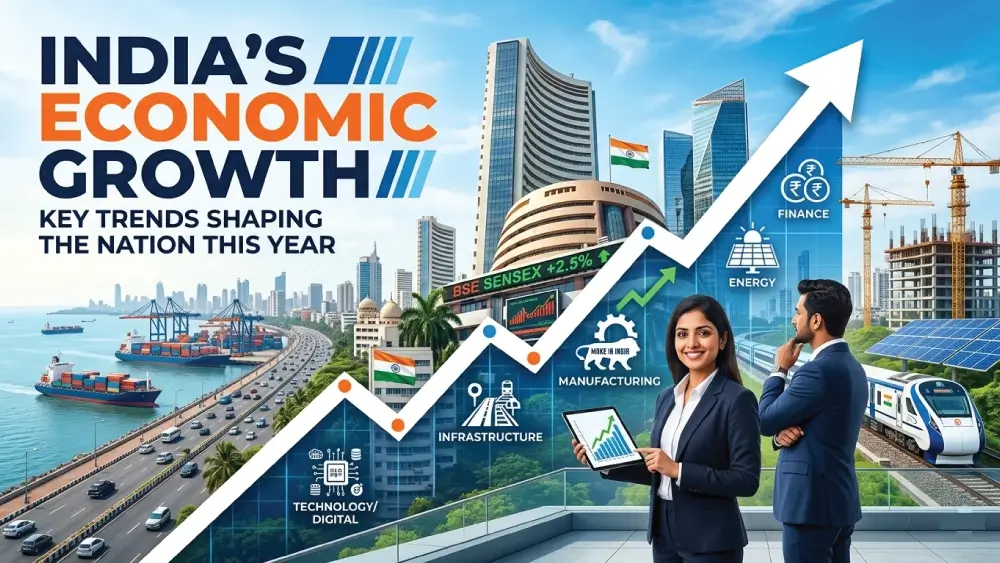
India’s economy continues to stand as one of the fastest-growing in the world, driven by strong domestic demand, rapid digital transformation, and strategic policy reforms. In 2026, the country’s growth story is not just about numbers-it’s about structural shifts that are redefining its global position. From manufacturing expansion to rising digital capabilities, the evolving INDIA NEWS landscape reflects a nation in transition. This detailed blog by Desh Headline explores the most important trends shaping India’s economic trajectory this year.
Understanding India’s Economic Growth
India has emerged as a global economic powerhouse, consistently outperforming many developed and emerging economies. Despite global uncertainties such as geopolitical tensions and inflationary pressures, India continues to show resilience.
The country’s economic growth is fueled by a combination of policy reforms, demographic advantage, and technological innovation, making it a key player in global markets.
Current GDP Outlook and Economic Performance
Recent projections indicate that India’s GDP growth remains robust in 2026. Estimates suggest growth between 6.5% and 7.6%, depending on global and domestic factors.
- India’s GDP grew around 7.8% in Q3 FY26, reflecting strong economic momentum.
- Annual growth is estimated at 7.6% for FY 2025–26, higher than previous years.
This positions India as one of the fastest-growing major economies globally.
Key Growth Drivers in 2026
Several critical factors are shaping India’s economic rise:
- Strong domestic consumption
- Government infrastructure spending
- Digital transformation
- Manufacturing push under “Make in India”
- Expanding service sector
These drivers collectively create a balanced and diversified growth model.
Manufacturing and Industrial Expansion
India’s manufacturing sector is witnessing a significant resurgence. Recent INDIA NEWS highlights show that industrial output grew by 5.2% in February 2026, led by manufacturing performance.
Why Manufacturing Matters:
- Boosts employment
- Reduces import dependency
- Strengthens exports
Government initiatives like Production Linked Incentive (PLI) schemes continue to attract global investments, making India a manufacturing hub.
Digital Economy and Technology Revolution
India’s digital economy is one of the strongest pillars of growth.
A recent report highlights that AI, cybersecurity, and data skills are becoming essential for the workforce.
Key Developments:
- Rapid adoption of fintech and UPI
- Growth in startups and unicorns
- Expansion of digital services in rural areas
India’s digital transformation is not only boosting GDP but also improving governance and transparency.
Infrastructure Development and Investments
Infrastructure continues to play a crucial role in economic expansion.
Major Focus Areas:
- Highways and expressways
- Railways modernization
- Smart cities and urban development
- Renewable energy infrastructure
Government capital expenditure has significantly increased, supporting long-term growth and job creation.
Rising Domestic Demand and Consumption
India’s large population and growing middle class are key economic drivers.
According to reports, strong domestic demand continues to support economic resilience even amid global uncertainties.
Consumption Trends:
- Increased spending in urban and rural areas
- Growth in e-commerce and retail sectors
- Rising disposable incomes
This demand-led growth model makes India less dependent on exports compared to other economies.
Global Influences and External Challenges
While India’s growth story is strong, external factors still play a crucial role.
Key Challenges:
- Rising oil prices
- Currency fluctuations
- Geopolitical tensions
Recent INDIA NEWS indicates that Middle East conflicts may impact inflation and supply chains, posing risks to growth.
Additionally, the Indian rupee has faced pressure due to global economic conditions.
Sustainability and Green Growth Initiatives
India is increasingly focusing on sustainable development.
Key Goals:
- Reduce emissions intensity by 47% by 2035
- Increase renewable energy capacity
- Promote electric vehicles
India has already achieved significant milestones in clean energy adoption, positioning itself as a leader in climate action.
Future Outlook: What Lies Ahead
Looking ahead, India’s economic growth is expected to remain strong but may moderate slightly.
- Growth may slow to around 6–7% in the coming years
- Inflation and global uncertainties could impact momentum
- Continued reforms and investments will be crucial
India is also expected to cross the $4 trillion economy mark soon, reinforcing its global economic standing.
Conclusion
India’s economic growth in 2026 reflects a combination of resilience, innovation, and strategic policymaking. Despite global challenges, the country continues to move forward with confidence.
From manufacturing expansion to digital transformation, the trends shaping India’s economy highlight its journey toward becoming a global economic leader.
As highlighted in Desh Headline, the ever-evolving INDIA NEWS landscape shows that India is not just growing-it is transforming.
FAQs
What is India’s GDP growth rate in 2026?
India’s GDP growth is estimated between 6.5% and 7.6%, depending on economic conditions.
What are the main drivers of India’s economic growth?
Key drivers include domestic demand, digital economy, manufacturing, and government investments.
How is the global situation affecting India’s economy?
Global factors like oil prices and geopolitical tensions are impacting inflation and trade.
Why is India’s digital economy important?
It boosts productivity, creates jobs, and supports innovation through technologies like AI and fintech.
What role does sustainability play in India’s growth?
India is investing in renewable energy and aiming to reduce emissions, ensuring long-term sustainable development.
What is the future outlook for India’s economy?
India is expected to remain one of the fastest-growing economies, with stable growth around 6–7% in the coming years.