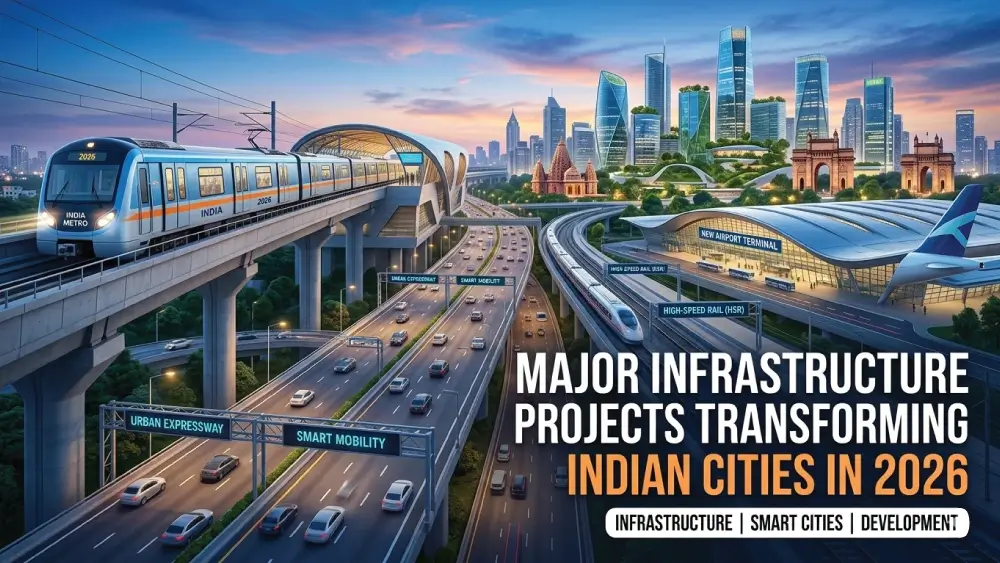
India is undergoing a historic transformation driven by large-scale infrastructure development. From metro rail expansions and expressways to smart cities and industrial corridors, 2026 marks a defining year for urban growth. These projects are not just reshaping skylines-they are redefining how people live, travel, and work in cities across the country. This comprehensive guide explores the most impactful infrastructure projects shaping Indian cities in 2026, while highlighting the ever-evolving landscape of LOCAL NEWS and urban development.
India’s Infrastructure Boom
India is currently in what experts call a “golden decade” of infrastructure development. Massive investments in transport, urban planning, and connectivity are accelerating growth across metro cities and emerging urban hubs.
Government initiatives, combined with private sector participation, are driving projects that aim to enhance mobility, reduce congestion, and improve quality of life.
Why Infrastructure Matters for Urban Growth
Infrastructure is the backbone of any modern city. It influences:
- Economic development
- Employment opportunities
- Real estate growth
- Quality of life
In 2026, infrastructure is not just about roads and bridges-it includes digital connectivity, smart governance, and sustainable urban planning.
Metro Rail Expansion Across Cities
Metro rail systems are among the most transformative infrastructure projects in India today.
Key Developments:
- The Meerut Metro became operational in 2026, improving regional connectivity in Uttar Pradesh.
- The Surat Metro Project is nearing completion, with trial runs already underway in 2026.
- Expansion continues in cities like Delhi, Mumbai, Bengaluru, and Chennai.
Metro systems are reducing travel time, easing traffic congestion, and promoting eco-friendly transport.
Why It Matters:
- Faster daily commutes
- Reduced pollution
- Increased property value near stations
Expressways and Highway Corridors ?️
India’s highway network is expanding at an unprecedented pace.
Major Projects:
- Delhi-Mumbai Expressway
- Bengaluru-Chennai Expressway
- Samruddhi Mahamarg
- Bharatmala highway corridors
India’s highway network has grown significantly, crossing over 1.46 lakh km in recent years.
Additionally, new expressways in Gujarat, such as the Namoshakti and Somnath-Dwarka corridors, are boosting regional connectivity.
Impact:
- Reduced travel time between cities
- Boost to logistics and trade
- Growth of satellite towns
Smart City Mission and Digital Urbanization
India’s Smart City Mission continues to redefine urban living.
Key Highlights:
- Over 350+ projects completed in Gujarat alone under smart city initiatives.
- Cities like Ahmedabad, Jaipur, Pune, and Indore are becoming tech-enabled urban hubs.
Smart cities focus on:
- Intelligent traffic systems
- Waste management
- Energy efficiency
- Digital governance
Local News Insight:
Urban local bodies are increasingly adopting digital twin technologies and smart planning tools to improve city management, as seen in recent municipal developments.
Airports and Aviation Infrastructure
Air connectivity is expanding rapidly in India.
Key Projects:
- Noida International Airport
- Navi Mumbai International Airport
- Upgraded terminals in Tier-2 cities
These projects are transforming cities into global business hubs.
Benefits:
- Increased tourism
- Boost to local economies
- Job creation
Industrial Corridors and Economic Zones
Industrial corridors are creating new economic ecosystems.
Notable Developments:
- Chennai-Bengaluru Industrial Corridor
- Krishnapatnam Industrial Smart City (Kris City)
Kris City is being developed as a self-sustaining industrial hub with modern infrastructure and urban facilities.
Impact:
- Increased manufacturing activity
- Job opportunities
- Urban expansion
Port-Led Development and Logistics
India is strengthening its logistics sector through port-led development.
Major Initiative:
- Sagarmala Programme
This initiative focuses on improving port infrastructure and coastal connectivity to enhance trade efficiency.
Benefits:
- Faster cargo movement
- Reduced logistics costs
- Strengthened export capabilities
Impact on Real Estate and Local Economies
Infrastructure development directly impacts property markets.
Key Trends:
- Metro connectivity increases property prices by up to 25%
- Expressways boost land demand in outskirts
- Smart cities attract investors
Local News Insight:
Municipal budgets across cities are prioritizing infrastructure projects like roads, transport, and urban beautification, showing strong local-level commitment.
This shift is clearly visible in local news updates covered by platforms like Desh Headline, where city-level development stories are gaining prominence.
Challenges in Infrastructure Development
Despite rapid progress, challenges remain:
- Land acquisition delays
- Environmental concerns
- Funding constraints
- Project execution delays
For example, some urban projects face delays due to policy changes or expansion plans.
Future Outlook: What Lies Ahead
The future of Indian infrastructure looks promising:
- Expansion of metro networks in Tier-2 cities
- Growth of electric mobility infrastructure
- Increased private sector participation
- Focus on sustainability
Government investments in highways and transport continue to rise, reinforcing long-term growth.
Conclusion
Infrastructure projects in 2026 are not just about development-they are about transformation. From metros and expressways to smart cities and industrial corridors, India is building a future-ready urban ecosystem.
As highlighted in evolving LOCAL NEWS, cities are becoming smarter, more connected, and economically vibrant. Platforms like Desh Headline play a crucial role in bringing these local transformations to the forefront, helping citizens stay informed about the changes shaping their daily lives.
FAQs
Why are infrastructure projects important for Indian cities?
They improve connectivity, boost economic growth, and enhance living standards.
Which infrastructure project has the biggest impact?
Metro rail systems and expressways have the most immediate impact on mobility and real estate.
How do smart cities benefit citizens?
They offer better services, improved governance, and sustainable living environments.
Are infrastructure projects increasing property prices?
Yes, areas near metro lines and highways often see significant price appreciation.
What challenges do these projects face?
Delays, funding issues, and environmental concerns are major challenges.
What is the future of infrastructure in India?
The focus will be on sustainability, digital integration, and expansion into smaller cities.